The short answer
Before you store your RV, check the seams, vents, skylights and the AC unit. Reseal anything that is cracked, or coat the roof if it is worn, so water doesn't sit in it all winter.
Where RV roofs leak
Most RV leaks start where something goes through the roof or where two pieces meet. The sealant at these spots dries out in the sun and cracks in the cold.
Seams and edges. The roof meets the side walls here. Sealant along the edge trim breaks down first.
Vents and skylights. Every opening has a ring of sealant around it. Skylight domes can also crack.
AC gasket. The AC unit sits on a foam gasket. When the gasket flattens or splits, water runs straight into the ceiling.
Ladder, antenna and solar mounts. Each screw is a small hole in the roof. If the sealant over it fails, water follows the screw in.
End caps. The front and rear caps have long seams that open up as the RV flexes on the road.
Signs you already have a leak
Water often gets in long before you see it. Look for these signs:
Stains on the ceiling or walls, even small ones near a vent or corner.
Soft spots when you press on the ceiling or walk on the roof.
A musty smell after rain or when you first open the RV.
Cracked, peeling or shrunken sealant around fixtures and seams.
Bubbles, wrinkles or tears in the roof membrane.
If you see any of these, the roof needs attention before storage.
Reseal or coat?
Reseal when only the fixtures are failing. If the roof itself is in good shape and the trouble is around vents, seams and mounts, fresh sealant at those spots is usually enough.
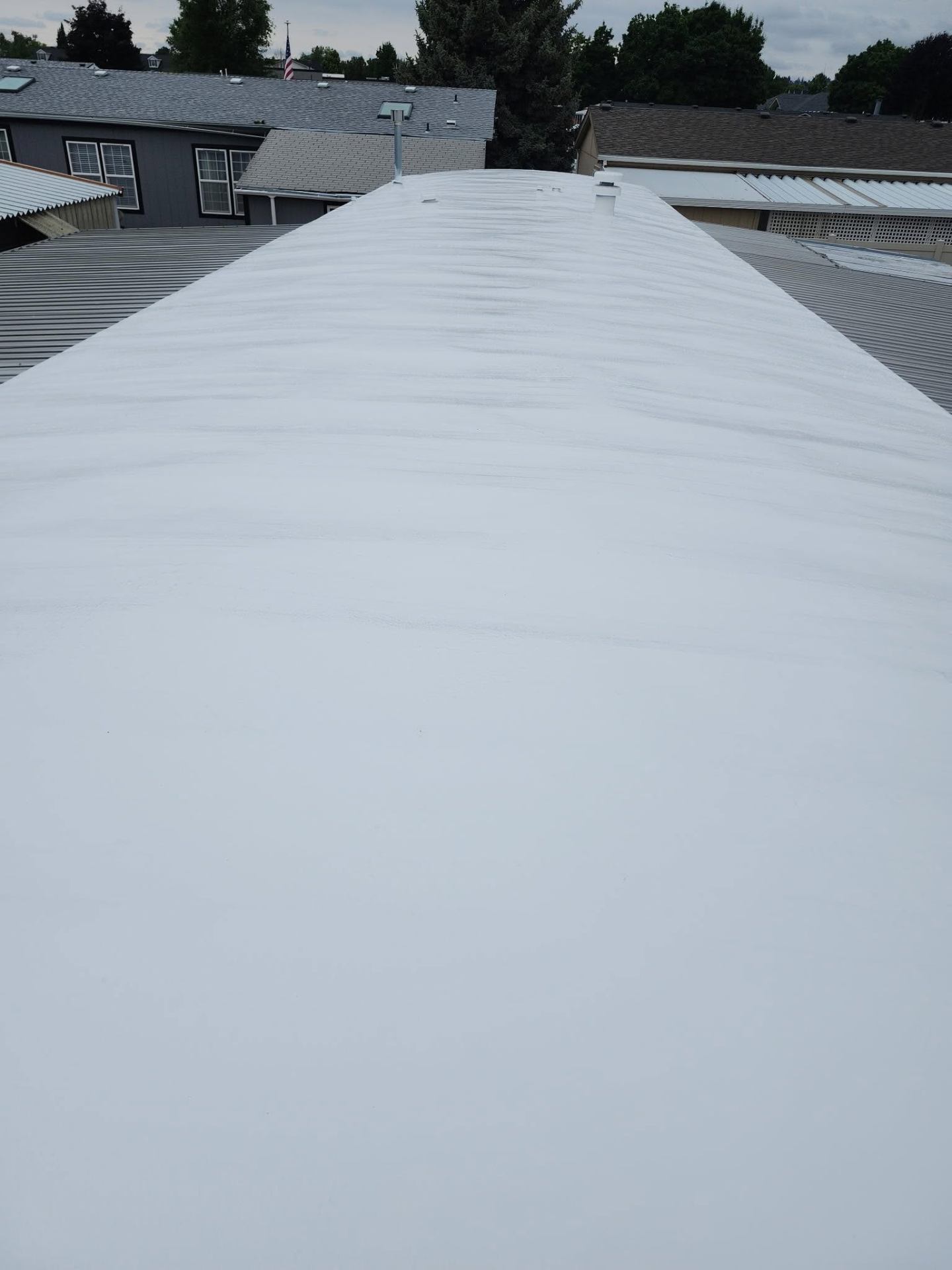
Coat when the whole roof is worn. If the roof is chalky, faded, cracking or thin, a full coating renews the surface and protects the whole roof, not just the problem spots.
We'll tell you which one your roof needs at the inspection.
Why fix it before storage
An RV in storage sits for months. Nobody is inside to notice a drip. Water that gets in during a storm stays in the roof and walls.
Over the winter it soaks into the roof deck and spreads into the wall framing. It freezes and thaws again and again. By spring, a small leak can mean rot and soft spots that cost far more to fix.
Sealing and coating before storage keeps the water out from the start.
Get it done in our shop
We work on RVs of any size, from truck campers to the largest Class A motorhomes. The work happens inside our shop in Chattaroy, WA, not in your driveway.
Call 509-230-7262 to set a drop-off time, or see our RV roof coating and leak repair page to request a quote.
Frequently asked
- Look for water stains on the ceiling or walls, soft spots on the roof or ceiling, a musty smell after rain, cracked or peeling sealant, and bubbles or tears in the roof.
- Usually, yes. If the roof deck is solid, a coating renews the roof you already have. If we find damage that needs more than a coating, we'll tell you at the inspection.
- Yes. RV roofs are done in our shop, so we keep booking through the cold months.
Ready for a real number?
Book a free roof inspection today.
Photo report, honest recommendation, firm written quote. No pressure.